
Fatigue & durability analysis

Predicting the onset of fatigue damage and service life under repeated loading.

Talk to a durability engineer arrow_forward
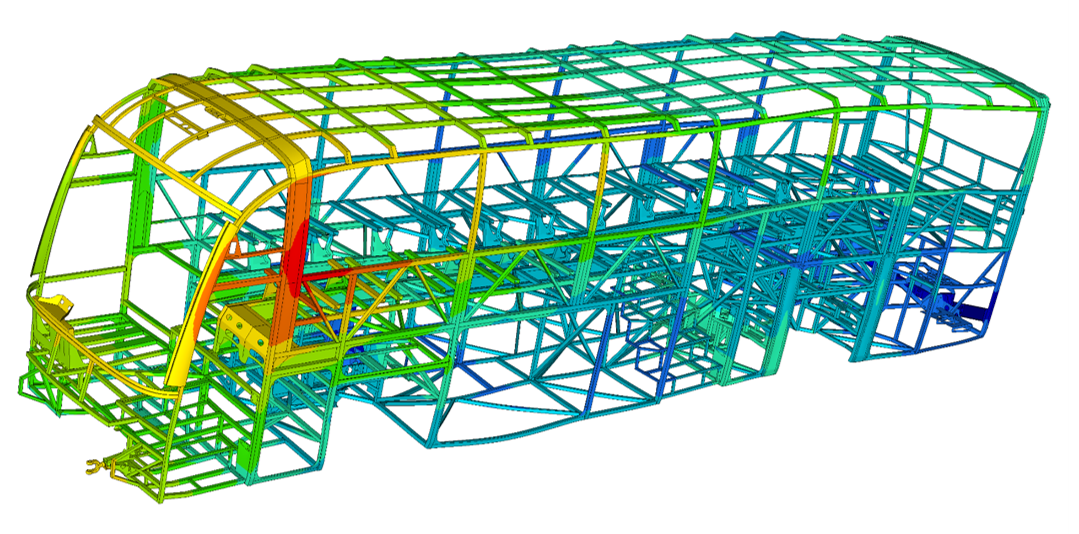
Fatigue damage distribution on a welded structure
ISO 9001 EN 9100 ISO 27001 TISAX Level 3
BorgWarner Brose SGS Flex Hyundai Claas Knorr-Bremse Bosch

The aim and outcome of a fatigue and durability analysis

The aim of a fatigue and durability analysis is to evaluate how a component or structure performs under repeated or cyclic loading throughout its service life. It helps engineers predict the onset of fatigue damage, estimate service life, and ensure long-term reliability and safety.

The outcome of a fatigue and durability analysis is an assessment of fatigue life, damage accumulation, critical locations prone to crack initiation, and the factor of safety against fatigue failure. These results support design improvements, maintenance planning, and validation of durability requirements.
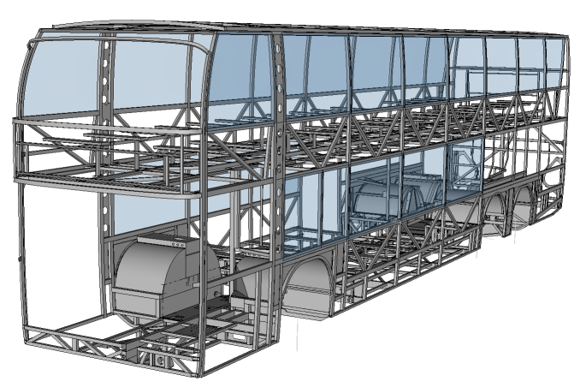
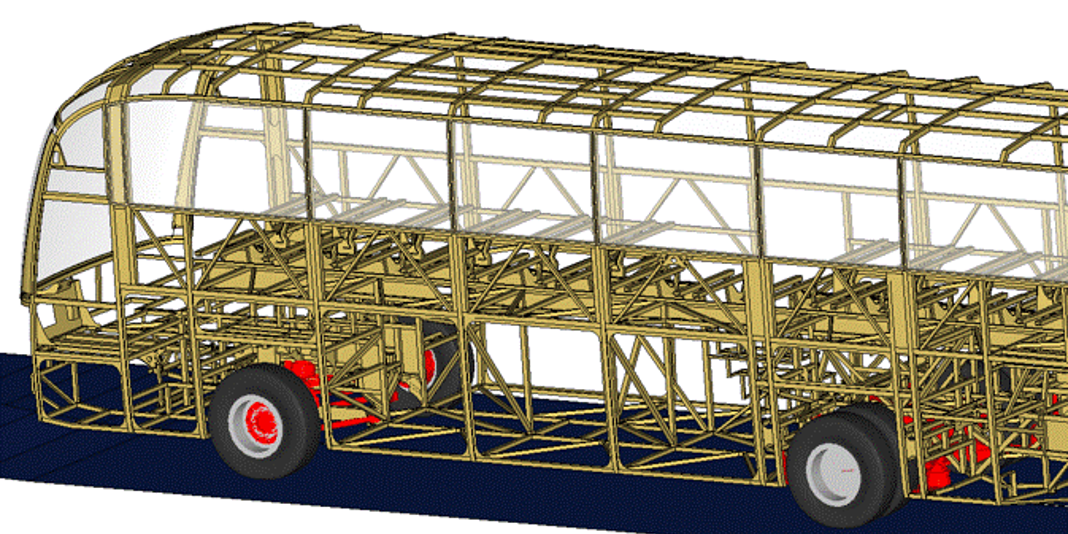
Fatigue life evaluation on a welded joint

Analysis types we run

High-cycle fatigue (HCF) analysis

  • fatigue behavior under a large number of cycles with primarily elastic stresses
  • typically used for rotating machinery, aircraft and automotive components

Low-cycle fatigue (LCF) analysis

  • fatigue under fewer cycles with significant plastic deformation
  • common in highly loaded structural parts and thermal cycling applications

Stress-life (S-N) analysis

  • strain-based methods to estimate fatigue life where plastic deformation occurs
  • common for low-cycle fatigue assessments

Damage tolerance analysis

  • crack growth and remaining useful life of a component containing defects
  • widely used in aerospace and safety-critical structures

Cumulative fatigue damage analysis

  • effect of variable-amplitude loading over time
  • often based on Miner's Rule for damage accumulation

Vibration fatigue analysis

  • fatigue caused by dynamic and vibrational loads
  • important for vehicles, machinery and electronic equipment

Thermo-mechanical fatigue analysis

  • fatigue caused by a combination of thermal cycling and mechanical loading
  • common in engines, turbines and exhaust systems
Case study
Fatigue & durability · Railway

EN 13749 strength analysis of a railway bogie

We had to perform a strength analysis on a railway bogie to investigate if the welded structure fulfills the strength requirements of EN 13749, including operational and exceptional loadings. We performed quasi-static analyses for all the different load-cases and evaluated the fatigue life of the weldings according to Eurocode-3. The result was a technical report proving that the structure meets the requirements — the report is used in the type-certification process of the vehicle.

Full case study arrow_forward

What are the steps in a typical project?

1

Schedule a discovery call and together we decide what is needed to achieve your design objectives.

2

Receive a proposal within 3 days. For a one-time project, a 2–4 week service package meets most clients' needs.

3

When all input data specified in the proposal is given, a kick-off call gets the project started.

4

We issue a project status report document outlining background, modeling details, boundary conditions to ensure common understanding of the details.

5

We work collaboratively and quickly to meet objectives, maintaining focus on how design variants will be impacted based on simulation results.

6

The project report is updated with simulation results and design suggestions, and meetings are used to discuss conclusions and define next steps.

7

Achieve greatness.

Fatigue & durability in action

Autobus durability

  • durability analysis of a welded autobus structure with quasi-static load-cases
  • fatigue evaluation of the welding based on Eurocode-3

Virtual proving ground test of an autobus

  • VPG test of a welded steel autobus based on the Altoona test track
  • fatigue evaluation of weldings based on Eurocode-3

Composite bus durability

  • mechanical analysis of a polymer composite bus structure
  • durability assessment based on the OEM's safety factors

Railway bogie durability

  • mechanical analysis of a welded railway bogie acc. to EN 13749
  • fatigue evaluation of weldings based on Eurocode-3

Railway coach durability

  • mechanical analysis of a railway coach acc. to EN 12663
  • fatigue evaluation of weldings based on Eurocode-3

Fatigue assessment of a railway king-pin

  • mechanical analysis of a railway king-pin
  • fatigue evaluation of the weldings based on DVS 1612

Fatigue assessment of an alu-casting

  • topology optimization, mechanical analysis and fatigue assessment of an automotive casting
  • based on the FKM guideline

Helicopter rotor shaft

  • fatigue assessment of a bevel gear connection of a helicopter rotor shaft
  • for airworthiness certification
Talk to an engineer

Got a project that simulation could solve?

Drop your project specs below. We'll analyze your requirements and get in touch within 2 business days to discuss the technical approach.