
Frontal impact analysis
- vehicle or structure behavior during head-on collisions
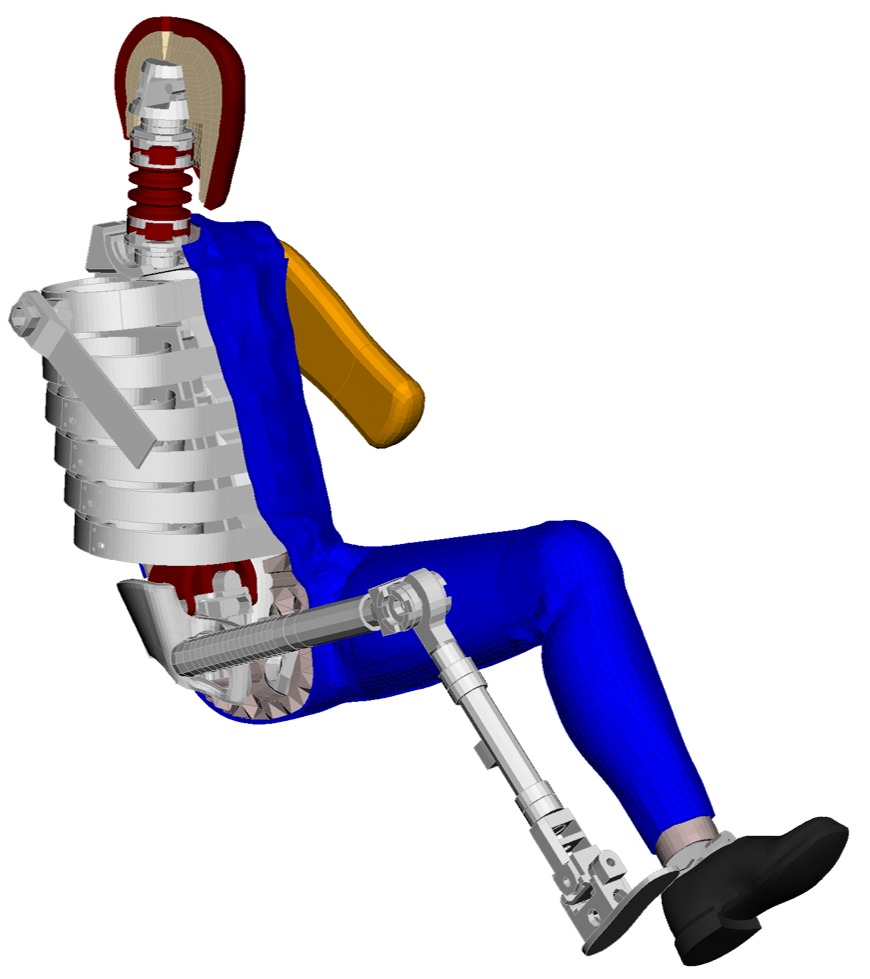
Structural response and occupant safety during an impact event.
Talk to a crash engineer arrow_forwardThe aim of a crash analysis is to evaluate the structural response of a vehicle, aircraft, or component during an impact event and to assess occupant safety, structural integrity, and energy absorption capability. It helps engineers optimize designs to minimize injury risk and comply with safety regulations.
The outcome of a crash analysis is a detailed assessment of deformation patterns, stress and strain levels, energy absorption, intrusion into occupant spaces, acceleration loads, and potential failure modes. These results are used to improve crashworthiness, enhance safety performance, and validate compliance with applicable standards.
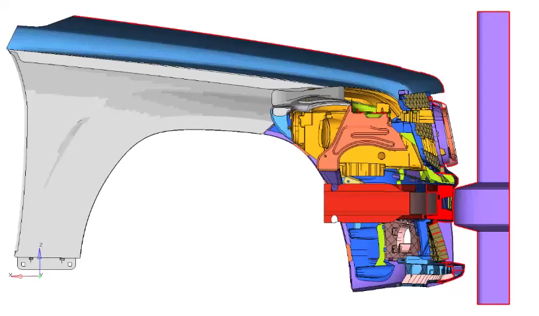
A new wagon design had to be analysed based on the crash scenarios of EN 15227. We modeled all the crash scenarios of the standard and evaluated the deformations, strains and absorbed energy of the structure, and made design suggestions to improve crashworthiness. The result was a prototype design optimized for crash safety.
Full case study arrow_forwardSchedule a discovery call and together we decide what is needed to achieve your design objectives.
Receive a proposal within 3 days. Project length scales with scope — engagements typically run from several months to even longer.
When all input data specified in the proposal is given, a kick-off call gets the project started.
We issue a project status report document outlining background, modeling details, boundary conditions to ensure common understanding of the details.
We work collaboratively and quickly to meet objectives, maintaining focus on how design variants will be impacted based on simulation results.
The project report is updated with simulation results and design suggestions, and meetings are used to discuss conclusions and define next steps.
Achieve greatness.
Drop your project specs below. We'll analyze your requirements and get in touch within 2 business days to discuss the technical approach.