External aerodynamics
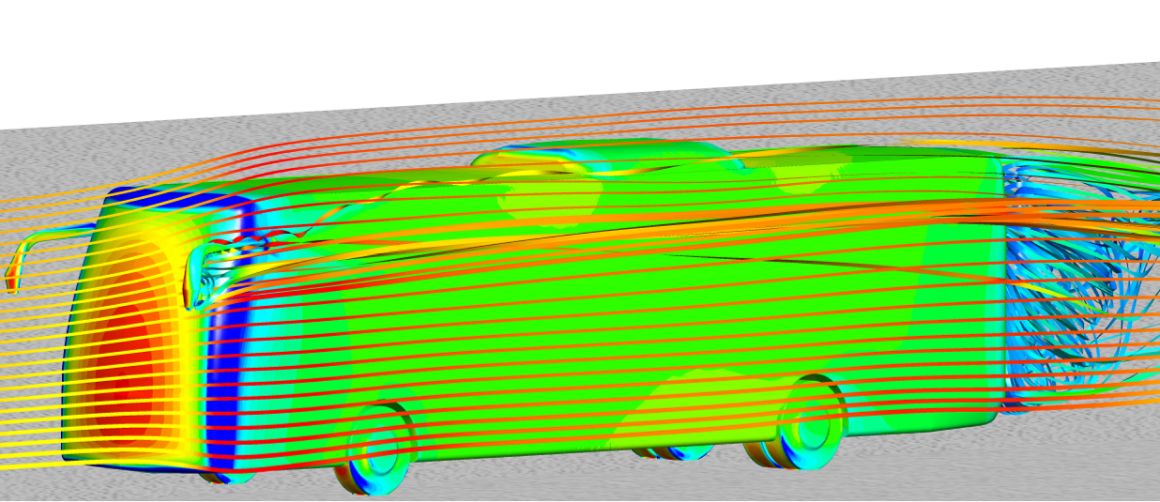
- steady-state incompressible external flow
- transient crosswind and gust response
- yaw and side-force sensitivity analysis
Understanding of airflow effects and the efficiency
Talk to an aerodynamics expert arrow_forward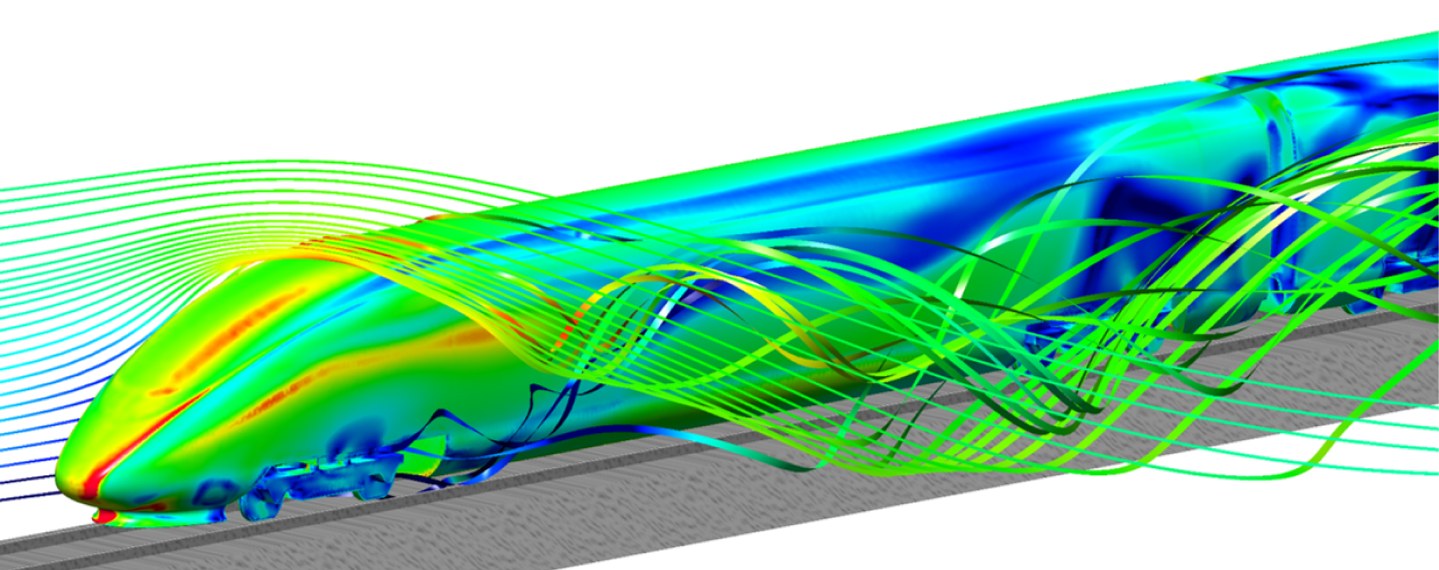
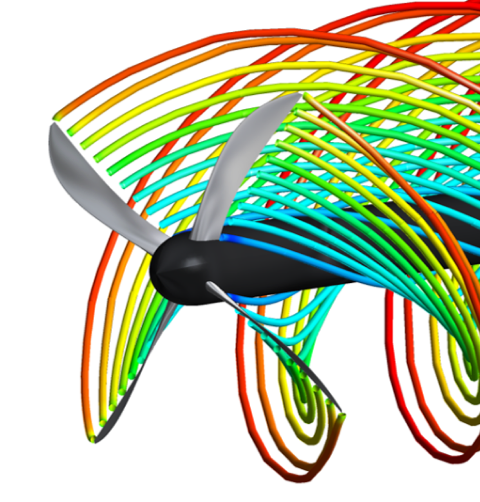
The aim of an aerodynamics analysis is to understand how air flows around an object and how this flow influences its performance, efficiency, stability, and safety. It helps engineers evaluate and optimize designs by minimizing drag and maximizing desired forces such as lift or downforce. The outcome of an aerodynamics analysis is a set of aerodynamic characteristics, including lift, drag, pressure distribution, and airflow patterns. These results are used to improve the design and predict its real-world performance under different operating conditions. We combine steady-state and transient CFD with wind tunnel and flight/field testing to validate designs across the full operating envelope.
Our in-house laboratory captures precise empirical boundary conditions and material data to calibrate and validate our numerical models against real-world physics. This tight integration of physical testing and simulation eliminates modeling assumptions and guarantees the accuracy of complex fluid, thermal, and structural designs.
The requirement was to design a new air intake configuration for a lightweight aircraft. The objective was to improve the engine cooling efficiency, thereby enabling the aircraft to operate at full engine power for extended periods even on hotter days. We optimized the geometry of the air intake by using aerodynamics analysis at given operational conditions.
Schedule a discovery call and together we can decide what is needed to achieve your business objectives.
Receive a proposal within 3 days. For a one-time project, a 2–4 week service package meets most clients' needs.
When all input data specified in the proposal is given, a kick-off call gets the project started.
We issue a project status report document outlining background, modeling details, boundary conditions to ensure common understanding of the details.
We work collaboratively and quickly to meet objectives, maintaining focus on how design variants will be impacted based on simulation results.
The project report is updated with simulation results and design suggestions, and meetings are used to discuss conclusions and define next steps.
Achieve greatness.
Drop your project specs below. We'll analyze your requirements and get in touch within 2 business days to discuss the technical approach.